Pleasure as a Radical Resolution: Why Feeling Good Is Political
By Hail Groo, Historian of Gender & Sexuality (MA History)
Every January, we are handed the same script.
Be better.
Be smaller.
Be more productive.
Be less indulgent.
Resolutions arrive cloaked in moral language. Discipline, restraint, and self-control are ideas deeply embedded in Western culture’s long discomfort with pleasure. Especially whose pleasure counts. Especially when that pleasure belongs to women, queer people, disabled people, fat people, or anyone whose body has historically been treated as something to manage rather than honor.
As a historian of gender and sexuality, I don’t see this as coincidence. I see it as inheritance.
Western culture has spent centuries moralizing pleasure, ranking it, policing it, and weaponizing it—particularly sexual pleasure. What we feel in our bodies has never been separate from what happens in legislatures, courts, churches, or classrooms. Pleasure is not apolitical. It never has been.
And that is precisely why reclaiming it—especially self-pleasure—is a radical act.
How Pleasure Became Suspicious

To understand why pleasure still feels indulgent or “extra,” we have to look backward. Christian moral philosophy in Europe framed pleasure as dangerous unless tightly controlled. Desire was something to be disciplined, especially in women, whose bodies were imagined as unruly, tempting, and in need of governance. Sexual pleasure, when tolerated at all, was justified through reproduction or marriage—not enjoyment.
This moral logic followed European colonial expansion. Control over bodies, particularly women’s bodies and non-normative sexualities, became a mechanism of social order. Laws against sodomy, contraception, abortion, and even masturbation were not merely about morality; they were about power.
That legacy persists.
Modern research continues to show that sexual behavior and political ideology are deeply intertwined. A major study found that people who engage in more sexually adventurous behaviors—masturbation, sex toys, non-traditional practices—tend to hold more socially liberal political views, while those with more restrictive sexual practices tend to align with social conservatism (Hatemi, Crabtree, & McDermott, 2016). This doesn’t mean pleasure causes politics or vice versa—but it does confirm what historians and activists have long argued: what happens in the bedroom is never separate from what happens at the ballot box.
As the authors themselves wrote, “sex is substance.”
Why Sex Is Always a Political Target
If pleasure were trivial, lawmakers wouldn’t be so obsessed with it.

Sex is consistently used as a tool for political manipulation because it activates fear, desire, shame, and identity all at once. Psychologists and political theorists alike note that sex-related issues—abortion, LGBTQ+ rights, sex education—are easy to weaponize precisely because they tap into deeply internalized beliefs (Psychology Today, 2022).
When states regulate reproductive healthcare, restrict gender-affirming care, or censor queer narratives, they are not protecting morality. They are asserting control over whose bodies are allowed autonomy—and whose pleasure is deemed dangerous.
This is why pleasure activism matters.
Adrienne Maree Brown defines pleasure activism as the work of reclaiming our whole, satisfiable selves from systems of oppression. Modern clinicians and scholars echo this framing, noting that pleasure is shaped by power dynamics—gender, class, race, disability—and cannot be accessed equally under unequal systems (Modern Intimacy, 2024).
Pleasure isn’t just personal. It’s structural.
Women’s Pleasure and the Patriarchal Bargain
Women’s pleasure has long been treated as optional at best and transgressive at worst.
Across cultures and generations, women have been taught to prioritize others’ comfort over their own desire. Sociologist Carol Hanisch famously wrote that “the personal is political,” and nowhere is that more evident than in how women describe their intimate lives. Contemporary writing on women’s desire consistently reveals the same patterns: suppression, accommodation, silence, guilt (Sharma, 2025).
Many women don’t struggle to experience pleasure because their bodies are broken—but because they’ve been conditioned to see pleasure as selfish, disruptive, or undeserved.
Historically, even conversations about masturbation were considered dangerous. In the U.S., Surgeon General Jocelyn Elders was fired in 1994 for merely suggesting that masturbation be discussed as part of HIV prevention—an incident feminist scholars frequently cite as evidence of how threatening autonomous pleasure remains (Huff, 2018).
When a woman touches herself without apology, she disrupts centuries of social conditioning.
That disruption is political.
Queer Pleasure as Survival
For queer communities, pleasure has never been separate from survival.

From the criminalization of homosexuality to the pathologizing of queer desire in early sexology, queer pleasure has been treated as evidence of deviance. Yet queer communities have consistently built spaces—bars, bathhouses, bookstores, sex shops—where pleasure could exist outside of shame.
These spaces mattered because they offered more than products. They offered language, safety, and permission.
Sexology itself reflects this tension. While early figures like Krafft-Ebing categorized queerness as pathology, later researchers—most notably Alfred Kinsey—used empirical data to show the vast diversity of human sexual behavior, destabilizing rigid moral hierarchies (ATL Tantra, 2025).
Pleasure became evidence, not of deviance, but of humanity.
The Pleasure Chest and the Politics of Sex Shops
This is where The Pleasure Chest enters the story.

Founded in the early 1970s, The Pleasure Chest emerged alongside second-wave feminism, the sexual liberation movement, and queer activism. Feminist sex shops like The Pleasure Chest were not just retail spaces; they were educational and political interventions.
As April Huff documents in her research on feminist sex shops, these stores positioned pleasure as something women and queer people deserved—not something to hide or apologize for (Huff, 2018). Staff were educators. Products were tools for autonomy. Shopping itself became a form of ethical, feminist consumption.
In cities like New York, Los Angeles, and Chicago, The Pleasure Chest offered a radically different model: inclusive, non-judgmental, pleasure-forward. Long before “sex-positive” became a marketing buzzword, these spaces centered consent, agency, and embodied knowledge.
Today, The Pleasure Chest’s online presence extends that legacy—making pleasure education accessible beyond geography, while maintaining its political roots.
This matters because access matters.
Self-Pleasure as Renewal
So what does all of this mean for a new year?
It means that choosing pleasure—especially self-pleasure—is not escapism. It’s restoration.
Research increasingly shows that pleasure supports mental health, reduces stress, improves sleep, and strengthens bodily autonomy. But beyond the physiological benefits, self-pleasure offers something more radical: self-knowledge without mediation.
When you masturbate, you don’t perform. You don’t negotiate. You don’t shrink yourself for someone else’s comfort.
You listen.
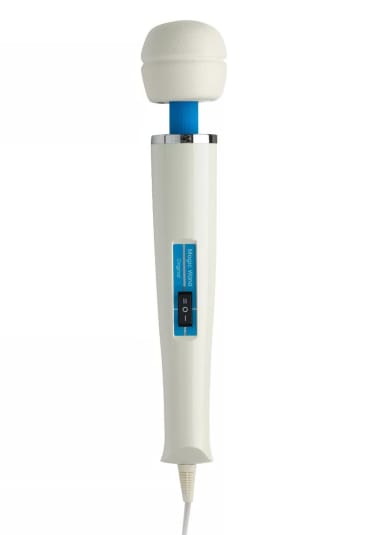
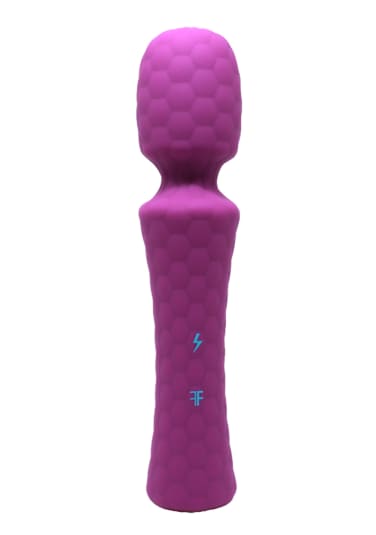
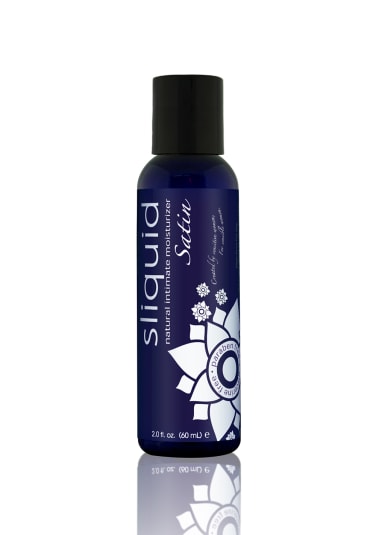
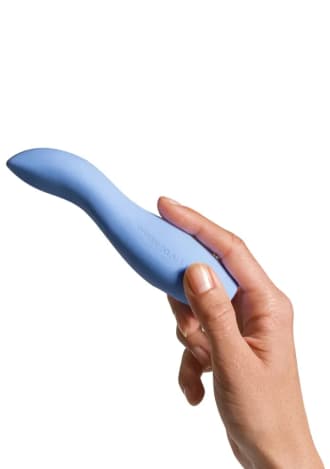
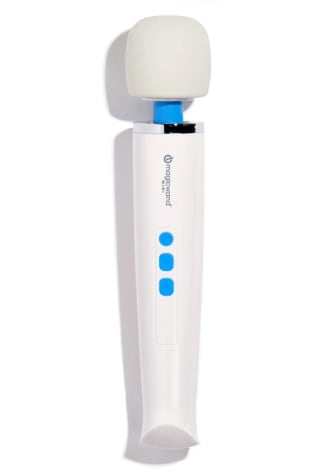
That’s why tools matter—not as solutions, but as supports. A compact wand like the FemmeFunn Ultra Wand Mini or the Magic Wand Mini Rechargeable isn’t about intensity for intensity’s sake; it’s about accessibility, portability, and choice. A silky, glycerin-free lubricant like Sliquid Satin or The One Organic Lube supports bodies that are sensitive, aging, healing, or simply deserving of care.
These are not indulgences. They are technologies of autonomy.
Why Pleasure Belongs in Our Resolutions
If politics is about who gets to thrive, then pleasure belongs at the center of political imagination.
What would it mean to resolve not to punish our bodies, but to inhabit them more fully?
What if “feeling good” wasn’t something we earned through productivity, thinness, or conformity—but something we practiced as a form of resistance?
Pleasure teaches us boundaries.
Pleasure teaches us consent.
Pleasure teaches us that our bodies are not problems to solve.
As a historian, I can tell you this: cultures that fear pleasure are cultures that fear autonomy. And people who know how to feel good—on their own terms—are harder to control.
So this year, I’m offering a different resolution.
Touch yourself without apology.
Rest without guilt.
Choose tools that support your body, not shame it.
Remember that pleasure is not frivolous—it is foundational.
Feeling good is not the opposite of political engagement.
It is the beginning of it.
References & Further Reading
-
Brown University Watson Institute (Oct 26, 2016) — New study finds that sexual behaviors align with political values
https://home.watson.brown.edu/news/2016-10-26/new-study-finds-sexual-behaviors-align-political-values -
Psychology Today (Mar 21, 2022) — When Sex Is Used for Power and Politics
https://www.psychologytoday.com/us/blog/sex-is-language/202203/when-sex-is-used-power-and-politics -
Gaysi Family (Apr 3, 2025) — Pleasure Is Political: Women, Desire, and Patriarchy
https://gaysifamily.com/lifestyle/pleasure-is-political-women-desire-and-patriarchy/ -
Personality and Individual Differences (2016) — Hatemi, Crabtree, McDermott — The relationship between sexual preferences and political orientations
https://www.sciencedirect.com/science/article/abs/pii/S0191886916310364
DOI: https://doi.org/10.1016/j.paid.2016.10.008 -
Taylor & Francis Online (Apr 25, 2018) — April Huff — Liberation and Pleasure: Feminist Sex Shops and the Politics of Consumption
https://www.tandfonline.com/doi/full/10.1080/00497878.2018.1454923 -
ATL Tantra (Sep 15, 2025) — Sexology: The Intersection of Politics, Pleasure and Science
https://www.atltantra.org/blog/science-pleasure-politics
Modern Intimacy (May 27, 2024) — Imani Reynolds, LMFT — What is Pleasure Activism? The Politics of Pleasure
https://www.modernintimacy.com/what-is-pleasure-activism-the-politics-of-pleasure/